
Three days to cancel
You may cancel a signed home-improvement contract for any reason before midnight of the third business day after receiving your copy. Do it in writing.
Homeowner guide · New Jersey
You don't have to trust anyone's badge, ours included. The State of New Jersey publishes exactly how to verify a contractor before money moves. Here is the whole checklist, with the State's own links.
Why this exists
“Registration with the State does not constitute an endorsement of or approval for the home improvement contractor.”
The same honesty applies to us. LA Trusted Partners reviews the providers in its network for identity, coverage, responsiveness, and conduct — but our review is not a license, not a guarantee, and we may be paid by the provider that receives your request. So verify. The steps below work on any contractor in New Jersey, whether they came from us, a search result, or a knock on the door.
The sequence matters
Most home-improvement contractors must be registered with the NJ Division of Consumer Affairs; registration numbers begin with 13VH and must appear on contracts, advertising, and commercial vehicles. Plumbers, electricians, HVACR contractors, and locksmiths carry separate State licenses instead. Search the State database before any money moves.
A registered home-improvement contractor must carry commercial general liability insurance, and the contract must include a copy of the insurance certificate and the insurer's phone number. Call the insurer and confirm the coverage is current.
New Jersey requires a written contract for any home-improvement project over $500. It must include the contractor's legal name and business address, start and completion dates, a description of the work, the total price, and the registration number.
Unregistered contractors cannot be issued municipal construction permits. Electrical and plumbing permits must be signed and sealed by the licensed electrical contractor or licensed master plumber doing the work. If a contractor asks you to pull the permit yourself, treat that as a warning sign — you may also forfeit legal protections.
The State's guidance: never pay more than a third of the total before work begins, never pay cash, and never make the final payment before the final inspection is complete. The law prohibits demanding final payment before the improvement is finished.
Separate licenses
A 13VH registration covers general home-improvement work, but the State licenses a number of trades separately — these four come up most in home repairs. Ask for the applicable license number, not just a registration; electrical and plumbing permits must be signed and sealed by the properly licensed contractor.
After the storm
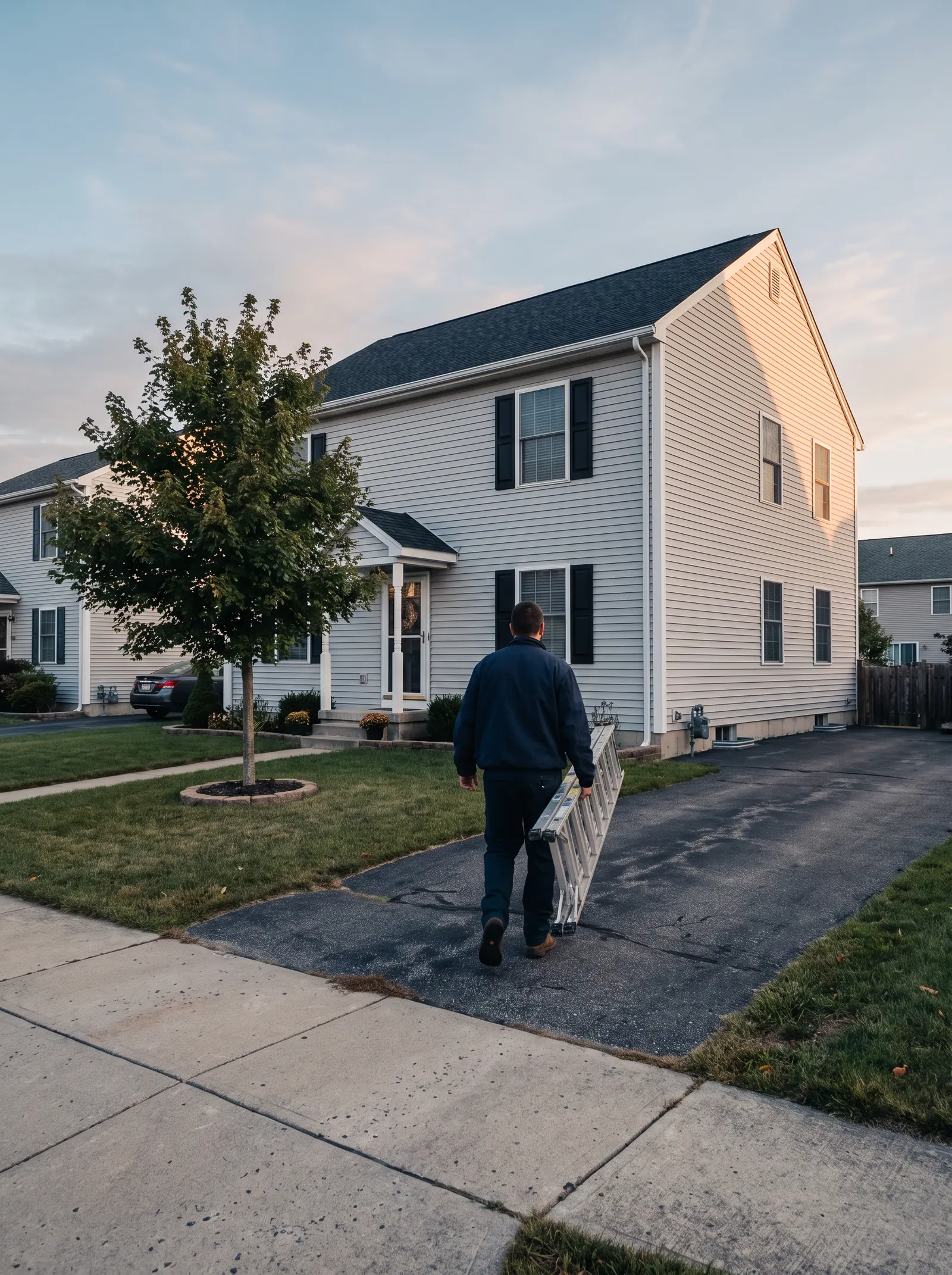
After wind and hail events, crews go door to door offering fast roof deals. The State names this pattern in its own warning list: a contractor who approaches you unprompted, “just in the neighborhood,” is a red flag — not a convenience. Take the flyer, close the door, and run the checks above before anyone gets on the roof. Do not let an expiring-price claim replace those checks.
Your rights
You may cancel a signed home-improvement contract for any reason before midnight of the third business day after receiving your copy. Do it in writing.
Final inspections must be completed before final payment, and a contractor may not demand final payment before the work is complete.
The Division of Consumer Affairs takes complaints at 1-800-242-5846 and online at NJConsumerAffairs.gov.
Check us too
We are a referral network, not a contractor — so the 13VH lookup applies to the provider who follows up, not to us. What you can hold us to: our request path asks for consent before anything is shared, our review standards are published, and our disclosure says plainly that we may be paid by the provider that receives a routed request and that you are never required to hire them.
Start a request and check the provider who follows up with the same list. Your request is shared only after you consent, and you are not required to hire the provider who contacts you.